

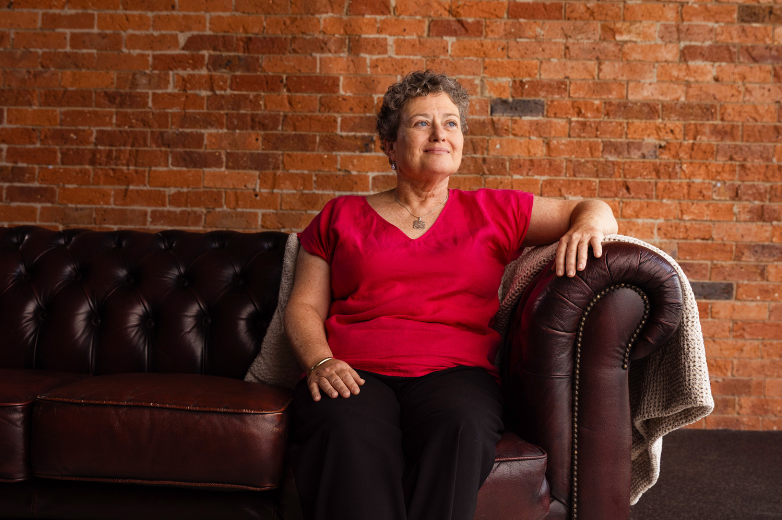
“You don’t know until you ask”: Christina’s story of care, clarity and planning ahead
Christina has spent much of her life caring for others. A nurse for 33 years, she grew up in Newcastle and was raised not only by her parents but also by three aunties who played a big role in her life. “They were very significant,” she says. “And as they aged, I helped them with their lives.”
Christina is also vision impaired, which has given her a unique perspective on navigating health systems and advocating for clear communication. “When you go into a hospital or a facility, there’s an expectation that everyone is the same,” she explains. “But people are so different and so unique.”
Learning about advance care planning through experience
Although advance care planning (ACP) was something Christina encountered professionally, it wasn’t until she became a carer for her aunties and her mum, each with life-limiting illnesses, that she truly understood its importance. “Personally, it was a lot more involved,” she says. “It’s about making sure you get everything you want and need for your life.”
One experience stands out: her Aunt Marie, diagnosed at 85 with inoperable esophageal cancer. “She’d been talking about her wishes for years,” Christina recalls. “But writing them down cemented them for her. Saying something out loud makes it real.”
Why planning matters
Christina believes ACP is essential because health professionals, while skilled, don’t know your life story. “They’re time-poor. They don’t know who you are or the life you’ve lived. Having something written down helps transfer that information quickly.”
Without those directives, Christina says, decision-making would have been overwhelming. “I would have struggled with the responsibility. It’s so reassuring to know I did the best I could for them, I did what they wanted.”
Her advice is clear: “We think we know what people want, but really, we don’t, how can you? You don’t know until you talk to them.”
A lifetime of conversations
For Christina, these conversations weren’t a checklist, they happened over a lifetime. “Time passes, and you can look back and say, ‘We did that, and it was a good thing.’ Because when someone is unwell, there’s so much going on, grief, fatigue, exhaustion. Advance care planning takes away assumptions and gives clarity.”
Christina’s message is simple: “Don’t leave it to chance. Experts know medicine, but they’re not experts in you.”
Start the conversation today
Advance care planning helps ensure your values and preferences guide your future health care, even if you can’t speak for yourself:
- Find out where to get started, who to talk to and where you can get support.
- For free advice or to order a starter pack, visit our website or call the Advance Care Planning Australia Advisory Line 1300 208 582.
- Watch Christina’s story