

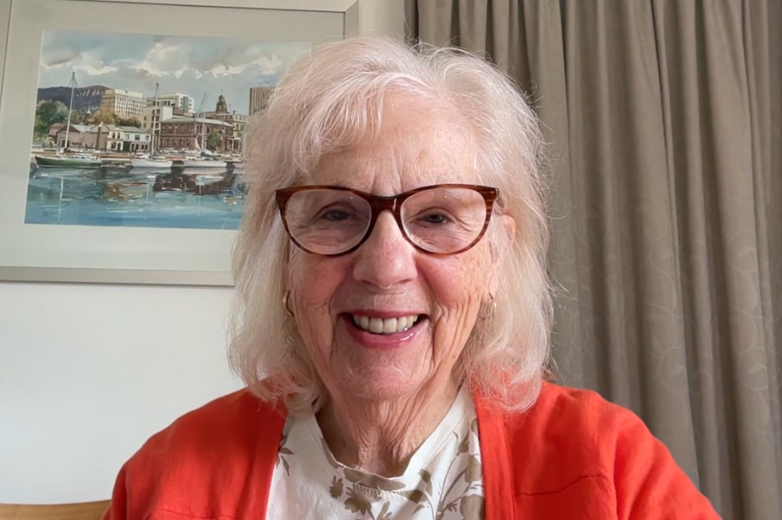
“Having a voice when it matters most”: Sue’s story about planning ahead
Sue resides in southern Tasmania, surrounded by the wild coastline, autumn colours and a warm, close-knit community. With a professional background as an academic and later a counsellor, she describes her life as “ordinary, busy, human”, full of family, friends and the simple routines that matter most.
But life shifted dramatically when her husband was diagnosed with dementia in his late 60s.
“It was a real shock,” she says. “At first, he was still very high-functioning. But dementia is a terminal condition, and things started to change. It was a step‑down journey. We all had to adjust.”
Facing the difficult conversations
Among the many practical tasks that come with ageing, wills, powers of attorney, important paperwork, Sue realised something crucial was missing.
“One of the most useful things you can do is advance care planning,” she says. “In Tasmania we call it a Care Directive. It’s about thinking through what you want your life to look like as you approach death. People don’t want to think about that. It’s confronting. But we are all going to die one day, and we don’t know when.”
Sue and her husband decided together to complete their advance care directives while he could still make decisions clearly.
“We didn’t want anyone else interfering with what we wanted,” she says. “If decisions had to be made medically, we wanted his wishes documented so everyone knew what mattered to him.”
Honouring the person he was
As her husband’s dementia progressed, the clarity provided by his advance care directive became invaluable, emotionally and practically.
“I’m so glad he did his planning,” Sue says. “When he became very unwell, no one had to guess. No one had to push or persuade. We could simply say, ‘Here is his document.’”
Her husband had moved into a residential aged care home several years earlier, and it had become his safe, familiar place. He didn’t want to return home. That, too, was his choice.
“The most important thing for him was normality,” Sue explains. “He wanted to stay in his room, surrounded by the things he knew. He wanted his favourite music playing, or sport on TV. Not candles or incense or something symbolic, just everyday life.”
Medically, he made his preferences clear: No treatments that would prolong dying. No interventions that would leave him unable to move, communicate or live independently. No resuscitation if quality of life could not be maintained.
“He wanted to ‘go to sleep’, as he put it. Peacefully. Naturally.”
A time of dignity, clarity and love
When the time came, Sue says the advance care planning they had done together “paid off in shovels”.
“Because his wishes were documented, nobody overrode anything. The staff knew exactly what he wanted, so they could relax too. I felt strong and clear. I didn’t have to fight. I could simply focus on him.”
She sat with him, talking gently, reassuring him, and playing his favourite music.
“Hearing is the last sense to go,” she says quietly. “So I kept speaking to him, telling him I was there, that everything was okay.”
She describes those final days as both deeply painful and surprisingly precious.
“It was a special time. Hard, yes—but peaceful. The planning we did meant he had the death he wanted. And I had the space to just be his wife.”
Why Sue wants others to plan ahead
Today, Sue is passionate about encouraging others to plan early, regardless of age.
“If you don’t do it, it’s even more confronting for your family in a crisis,” she says. “Without guidance, the medical system comes in, and suddenly you’re making decisions you’re not prepared for.”
Advance care planning, she says, is ultimately an act of love.
“It gives your family relief. It gives medical staff clarity. And most importantly, it gives you a voice—even if you can’t speak for yourself.”
Sue has now completed her own documents as well.
“We can’t control everything,” she says. “But we can have some say. And that makes a world of difference.”
Start the conversation today
Advance care planning helps ensure your values and preferences guide your future health care, even if you can’t speak for yourself:
- To begin your planning, visit Start planning – Advance Care Planning Australia
- To request a free starter pack, visit Order an information pack – Advance Care Planning Australia, call 1300 208 582 or email acpa@advancecareplanning.org.au
Advance Care Planning Australia is an Australian Government initiative administered by Metro South Health.